
Environmental Stewardship
Governance and Policies
Our Head of Corporate Social Responsibility oversees our environmental management system with our Facilities experts at all of our sites. Our policies and procedures are aligned with global standards for energy management and greenhouse gas emissions, air emissions, waste, water, scrap metal recycling, sustainable sourcing, safety standards, and training. In addition, our Board of Directors Nominating and Governance Council, cross-functional ESG Council, and Environmental, Health and Safety (EH&S) Team are responsible for ensuring we are compliant with applicable legal and regulatory requirements.
Environmental Management System
Our Environmental Management System outlines Ichor’s commitment to environmental stewardship, sustainability, and responsible resource management. We recognize that our operations have an impact on the environment, and we are dedicated to reducing this impact through continuous improvement in our environmental performance. This policy applies to all employees, contractors, suppliers, and stakeholders involved in our business activities.
Risk Identification and Management
We identified a set of transition risks associated with the shift to a low-carbon and climate-resilient economy, including carbon pricing relevant to facilities and products, mandates and regulations on existing products and services, and shifts in consumer preferences. We also recognize that extreme weather events pose a physical risk to our supply chain that could make an impact on our operations.
We also see opportunities in the transition to a low-carbon economy: additional growth through new sustainable products and markets, and improved operational performance through increased efficiency of our operations. We believe we are well positioned to take advantage of the opportunities as detailed in the Sustainable Solutions section
Goals to Minimize Our Environmental Impact
We continuously track progress and seek opportunities to minimize our impact in these areas:


Greenhouse Gas (GHG) Emissions
Our emissions are as follows:
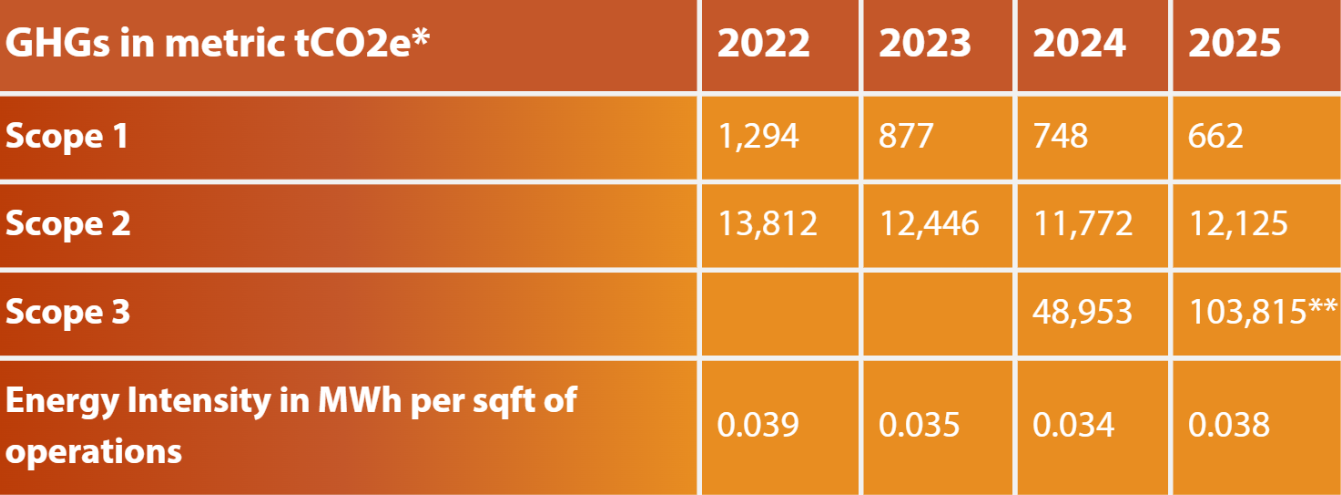
*Reported figures are location-based and calculated using the methodology from the GHG Protocol Corporate Edition. The data covers approximately 98% of our total operations. **2025 Scope 3 emissions rose significantly due to the increase in spend of purchased goods and services.
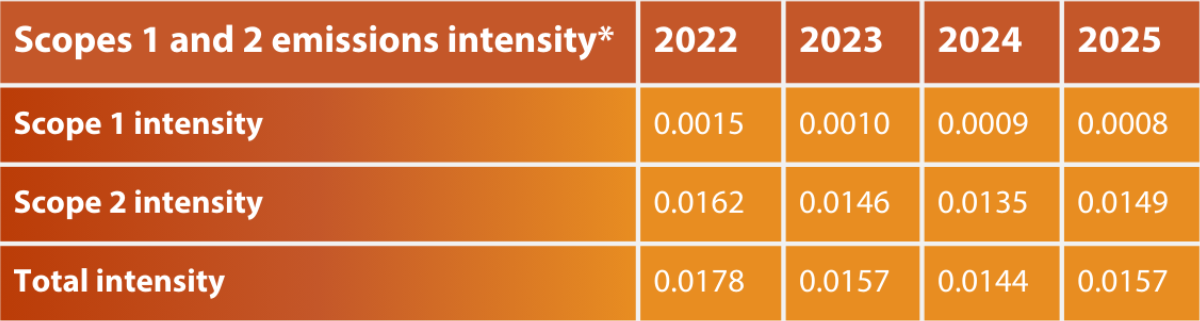
* The intensity figure is estimated using our reported 2022-2024 emissions per sq.ft. of total operational space, which was 850,000 sq.ft. Our operational space in 2025 was 814,000 sq.ft.

*Data covers approximately 98% of our total operations
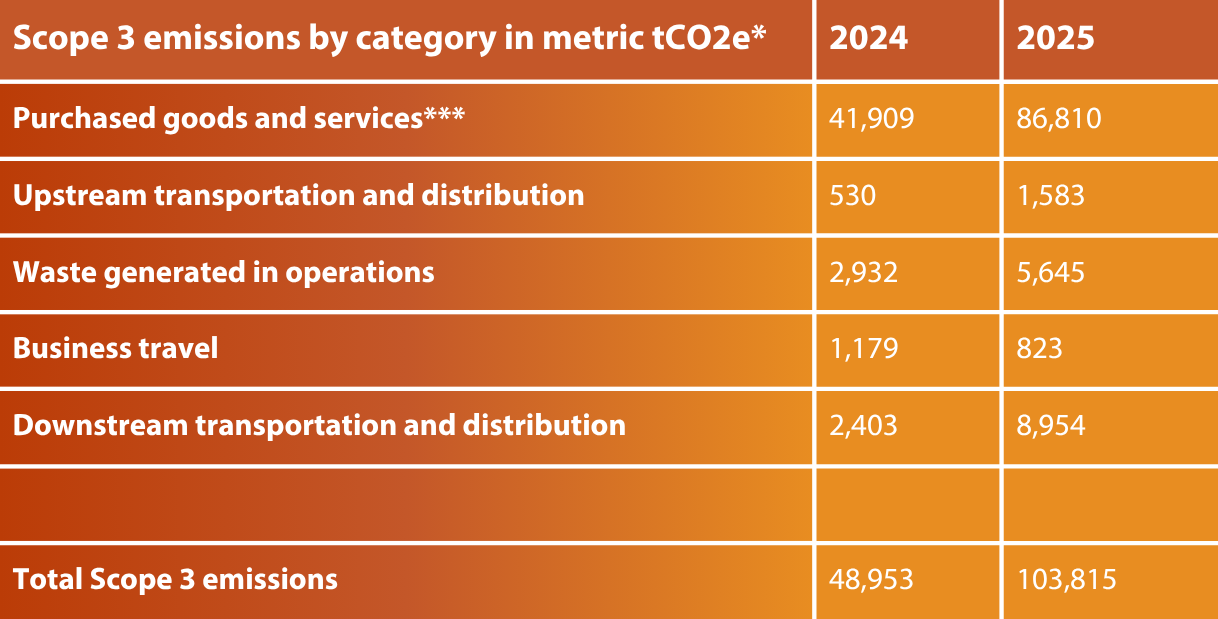
*Reported figures were calculated using the methodology from the GHG Protocol Corporate Edition. The data covers approximately 98% of our total operations. ***Purchased good and services emissions estimate was calculated using the GHG Protocol spend-based method. Emissions increased from 2024 to 2025 due to increased product demand.
We identified transition risks associated with supporting a global limit of 1.5°C to include directives and regulations on existing products and manufacturing processes, increased costs to utilize renewable energy sources, and research and development costs to identify environmentally conscious materials. We also recognize that extreme weather events pose a physical risk to our supply chain that could impact our operations.
We also see opportunities in the transition to a low-carbon economy:
The use of lower-emission energy sources, the development of low emission products with increased life cycles, and the enhanced collaboration with our suppliers and customers, upstream and downstream of our value chain.

As a result of our partnership with the US Department of Energy Industrial Technical Assessment Centers (ITAC) and our customers, we have completed energy assessments at all of our sites. The LED replacement program was one of several projects that were recommended by the assessors.
Our manufacturing facilities are replacing traditional fluorescent light systems with LED fixtures which has improved safety, and reduced replacement maintenance costs. This program will save 1785 MWh in electricity consumption per year!
In addition, we are proud to be selected for cost sharing grants from the US Department of Energy. The LED replacement program is the first project where grant funds will be utilized.
Ichor signed an agreement to participate in Schneider Electric's Catalyze program, under which 100% of the company's U.S. electricity consumption (Scope 2 GHG emissions) will be matched with energy attribute credits (EACs).
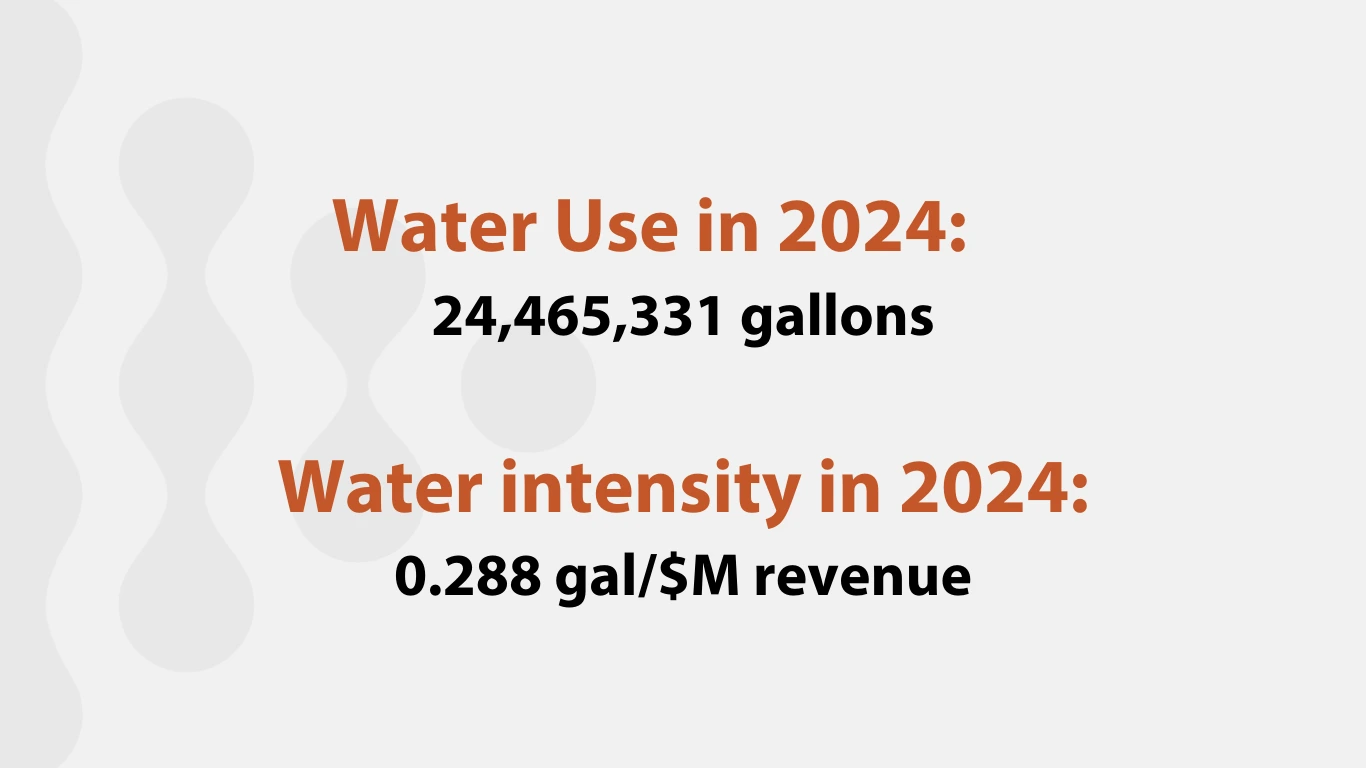
High purity water use and management is an important component of our manufacturing process, as it is used to cool material in machining and chemical delivery systems applications.
High purity water use and management is an important component of our manufacturing process, as it is used to cool material in machining and chemical delivery systems applications.


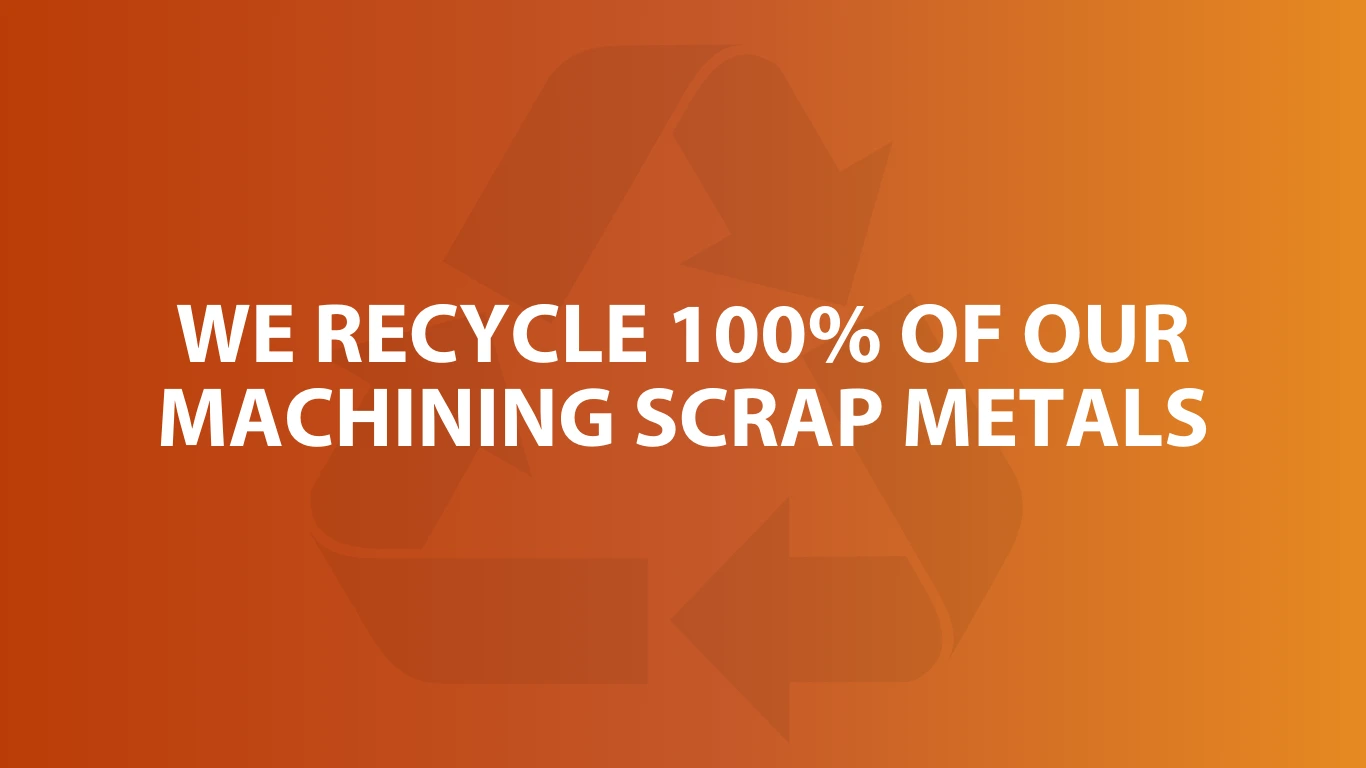
By reducing waste in our manufacturing processes, we can reduce environmental risk and operational costs. We track the amounts and types of waste generated by each facility. In addition to waste reduction, we reuse, recycle, or recirculate as many manufacturing byproducts as possible.
We're making ethical sourcing a priority in how we evaluate and manage our supply chain. We now track participation in the Responsible Business Alliance (RBA), a global industry standard for ethical business practices, as part of how we measure supplier performance and assess risk deeper in our supply chain. We've also formally partnered with RBA-aligned suppliers that account for 65% of our spend, showing our commitment to doing business responsibly and sustainably.
Looking ahead, our vision for supply chain success includes leveraging survey insights to expand RBA partnerships and enhance ESG compliance within our supplier network. To further support transparency and accountability, we continue to utilize a reporting mechanism, ensuring continued progress toward responsible sourcing and sustainability goals.
We are committed to the ethical procurement of raw materials, including precious metals and conflict minerals, ensuring that our supply chain upholds the highest standards of human rights and responsible sourcing. To address risks associated with conflict minerals and prevent human rights violations, we have implemented a comprehensive conflict minerals compliance program that establishes clear expectations for ethical sourcing, particularly in regions with heightened risks of violence and exploitation.
Our Conflict Minerals Policy aligns with the Dodd-Frank Act and follows industry best practices set by the Responsible Minerals Initiative (RMI) and its Responsible Minerals Assurance Process (RMAP). By adhering to these standards, we work to keep our supply chain free from materials sourced under conditions of conflict or human rights abuse.
In accordance with the OECD Due Diligence Guidance for Responsible Supply Chains of Minerals from Conflict-Affected and High-Risk Areas, we require our suppliers to comply with these responsible sourcing principles. Our responsible sourcing program ensures rigorous due diligence, supplier engagement, and transparent reporting—reinforcing our commitment to ethical sourcing across our global supply chain.
Establish Strong Company Management Systems
- Maintain conflict minerals policy, internal management system, and supply chain control systems
- Engage with suppliers, provide grievance mechanism
- Maintain Records
Identify & Assess Risk in the Supply Chain (Reasonable Country of Origin Inquiry)
- Evaluate products for use of minerals
- Identify suppliers of covered products
- Request and evaluate CMRTs
- Engage with suppliers to confirm data
- Determine RMAP conformance and risk level
Design & Implement a Strategy to Respond to Identified Risks
- Encourage suppliers not yet conformant to RMAP to join RMI and become conformant
- Work with suppliers to remove high risk smelters or refiners from supply chain if needed
- Report on risk mitigation efforts to senior management
Support Independent Third-party Audits of Smelters & Refiners
- Review and report on third party audits conducted on smelters and refiners
- Leverage RMI's RMAP audit status of smelters and refiners as reported by suppliers
Report on Supply Chain Due Diligence
- Report on conflict minerals due diligence and risk mitigation activity as required by law